AI-ready isn’t a technology question
Ask an admissions team whether they’re ready for AI and the conversation almost always turns to tools. Which platform, which features, which pilot, which vendor everyone else seems to be talking to. It’s a reasonable instinct. It’s also the wrong place to start.
Readiness isn’t about the tool you bolt on. It’s about the conditions you bolt it onto. And those conditions – your data, your processes, your governance – are usually the part nobody has looked at closely in years.
Here’s why it matters. AI doesn’t introduce new problems into an admissions function. It amplifies the ones already there, and it exposes them. The inconsistent way two teams record the same decision. The entry criteria that live in someone’s head rather than in a documented process. The data field that means three different things depending on who filled it in. None of that causes much trouble while humans are quietly absorbing the gaps. The moment a model is making or shaping a decision, those gaps stop being quiet. They become something you have to explain.
And someone will ask you to explain. An applicant who wants to know why they were flagged. A regulator who expects admissions decisions to be fair, consistent and defensible. A colleague in a meeting asking, reasonably, why the system did what it did. If the honest answer is “we’re not entirely sure how that decision was reached,” you don’t have an AI problem. You have a foundations problem that AI has made visible.
This is the part the market tends to skip. A great deal of energy goes into choosing the tool, and very little into asking whether the ground underneath it can bear the weight. So the pilot launches, the results underwhelm, and the AI gets the blame. Usually it wasn’t the AI. It was the data it was fed and the process it was asked to automate. A model is only ever as good as the inputs and the rules behind it, and admissions has no shortage of inputs and rules that have never been written down, let alone tested.
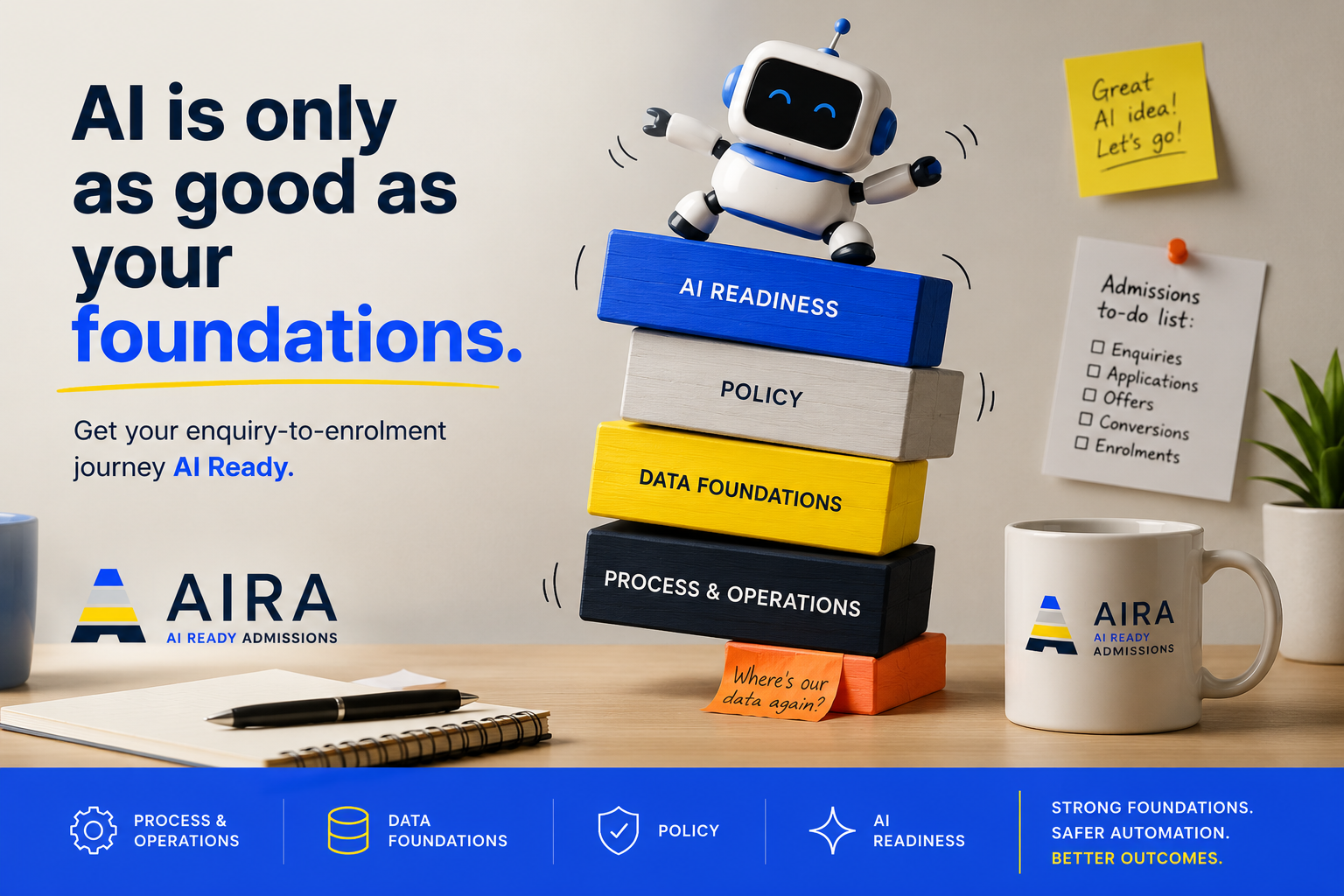
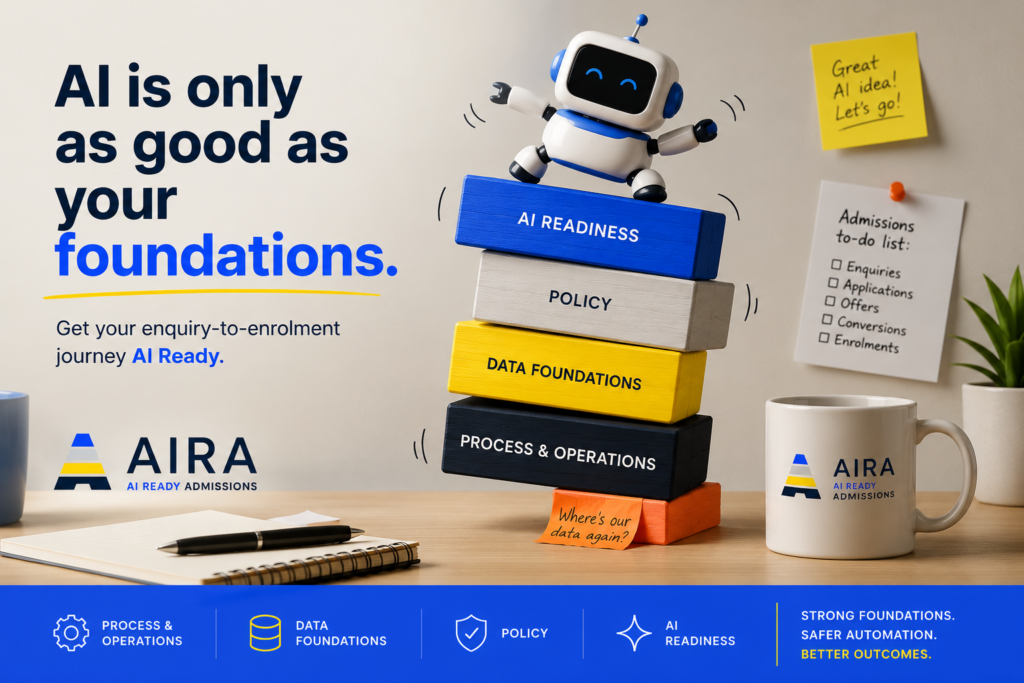
Think of it less like installing software and more like building. You wouldn’t choose the fixtures before you’d checked the foundations. AI-readiness works the same way. The institutions that get good results aren’t the ones who bought first. They’re the ones whose data was clean and consistent enough to trust, whose decision-making was documented well enough to explain, and whose governance was strong enough that an automated decision could be audited rather than waved through.
None of that requires you to have chosen a tool. In fact it’s better done before you do, because it tells you what you actually need – and it means that when you are ready to adopt something, you’ll know how to judge it rather than taking the vendor’s word for it.
That’s the gap AIRA (AI-Ready Admissions) is built to close. The programme is deliberately vendor-agnostic: it doesn’t sell, recommend or implement any AI tool. Its job is the bit that comes first – getting your data governance, your processes and your readiness to a point where AI has a fair chance of working, and where you can stand behind whatever it produces.
The entry point is a Data Governance Health Check: a structured look at where your foundations actually stand, before you commit budget or political capital to anything. It’s the difference between adopting AI and being ready for it. They aren’t the same thing, and the order matters.
So if “are you AI-ready?” has been on the agenda lately, it’s worth asking the quieter question first: ready on top of what?
Explore the AIRA programme or look us up on LinkedIn